Integrative cancer care · Alongside your existing treatment
Your oncologist is fighting the tumor. Someone should be paying attention to the terrain it is growing in, and the escape routes it is using.
Most people don’t die of cancer because there was no drug for it. They die because the cancer stopped responding to the drug that was working.
Watch Dr. Thomas’s free 45-minute presentationTreatment failure, not the absence of treatment, is the fundamental reason people die of cancer.
The tumor
What your oncologist is fighting
Chemotherapy, radiation, immunotherapy, targeted agents, and hormone blockade are the backbone of cancer treatment, and they are genuinely powerful.
But tumors adapt. Under pressure from treatment, cancer cells activate survival programs that blunt the drugs aimed at them. A regimen that worked for months stops working, and the reason is rarely that the drug was wrong. It is that the cancer learned to survive it.
Standard oncology is extraordinarily good at attacking the tumor. It is not designed to systematically address the mechanisms the tumor uses to survive that attack, or the host conditions that make those mechanisms easier to sustain.
The gap nobody is assigned to watch
Your oncologist’s job is the tumor: staging it, targeting it, and measuring the response. That work is essential. What falls outside that scope is the environment the tumor is growing in and the specific escape routes it uses. Not because they don’t matter. Because no one is assigned to them.
That gapis where our work sits.
The four pillars of resistance
The principal ways cancer cells evade the treatment aimed at them
Cancer cells have many ways to survive treatment. These four are the most consistently documented across tumor types, and the ones where intervention is most plausible. And a well-described mechanism is also a potential target.
Drug efflux pumps
Malignant cells over-express transport proteins that physically pump chemotherapeutic agents back out of the cell before they can do damage.
Hyper-efficient DNA repair
Chemotherapy and radiation work by breaking cancer DNA. Resistant cells patch those breaks faster than the treatment can create them.
Apoptosis evasion
Healthy cells self-destruct when damage accumulates. Cancer cells frequently mutate this off, replicating through damage that should have killed them.
Microenvironment shielding
The tissue neighborhood around a tumor can suppress local immune activity, forming a protective shield around the cancer.
The question I hear most often is why a treatment that worked for months suddenly stopped. The answer is usually that the cancer adapted. The question almost no one asks is whether anything can be done about the adaptation itself.
— Dr. Daniel Thomas, DO, MS
Our Approach
Optimizing the metabolic terrain and dismantling resistance pathways
The terrain is the environment the cancer is growing in. The escape routes are the survival programs it uses when treatment arrives, and four pillars carry most of the weight. They are different problems, they respond to different work, and they are meant to be addressed together.
The terrain
Change the conditions the cancer is growing in
Cancer does not grow in a vacuum. It grows in a body, and that body’s internal environment can be hospitable to malignancy or hostile to it. The tumor sits in an immediate microenvironment, and that microenvironment sits inside a whole-body metabolic state that largely shapes it. Insulin signaling, inflammatory load, coagulation status, iron availability, and numerous other measurable factors all influence how readily cancer cells proliferate and how well they tolerate treatment.
Most of these are not part of a routine oncology workup, not because they don’t matter, but because that environment is a different discipline, and one that falls outside the scope of a standard oncology visit.
What this looks like in practice
Comprehensive bloodwork evaluating 35 metabolic markers. Where those markers show conditions that favor tumor growth, we correct them using targeted dietary change, specific lifestyle modification, and supplementation chosen for your results rather than a standard protocol. That includes a full review of what you are already taking: which supplements are helping, which are doing nothing, and which may be working against your treatment. Knowing what to stop matters as much as knowing what to start.
We re-test. We adjust. The terrain is something we manage over time, not a one-time fix.
This terrain has its own page, covering the full 35-marker panel, what each marker measures, and how to begin.
Visit CancerBloodwork.comThe escape routes
Neutralize the pillars of resistance themselves
This is the part most patients have never been offered.
There is a substantial body of research on natural compounds and on existing, approved medications that appear to interfere with the specific survival mechanisms described above. Many of those medications are decades old, inexpensive, and carry well-characterized safety profiles. In laboratory and early clinical research, these agents have shown activity against efflux pumps, DNA repair machinery, apoptosis blockade, and the tumor microenvironment.
As a licensed physician I can prescribe the medications off-label and direct the use of the compounds, each selected against your specific cancer type, your current treatment, and your metabolic profile. They are used alongside your standard care, chosen and dosed to avoid interference with it.
An honest word about the evidence. Much of the research behind repurposed agents in oncology is preclinical or observational. Some of it is strong; some of it is early. I will tell you which is which for anything I recommend to you, and I will tell you when the answer is that we don’t know yet.
These agents are used to give you every reasonable advantage in fighting the cancer. Where one has a plausible mechanism, a well-understood safety profile, and no likely interference with your treatment, the case for including it does not require certainty, only that the potential benefit is real and the risk is small and known.
If you want certainty, no one in this field can offer it. What I can offer is a reasoned, mechanism-based case for each thing we try and a clear-eyed account of how much support stands behind it.
The escape routes in detail
Each pillar has a countermeasure worth considering
Which agents are appropriate depends entirely on your cancer type, your current regimen, and your labs, so the specifics belong in a consultation rather than on a web page. What follows is the logic.
Drug efflux pumps
The cell exports the drug before it can act.
The counterAgents that inhibit those transport proteins, so the chemotherapy already being given stays inside the cell long enough to do its work.
Hyper-efficient DNA repair
Breaks caused by treatment are patched faster than they accumulate.
The counterAgents that slow the repair machinery, so damage caused by chemotherapy and radiation persists rather than being erased between cycles.
Apoptosis evasion
The self-destruct signal has been switched off.
The counterAgents that work to restore sensitivity to that signal, so damaged cells respond to it the way healthy cells would.
Microenvironment shielding
The tissue around the tumor suppresses local immune activity.
The counterAgents aimed at reducing that local suppression, alongside the metabolic work in the first prong, which shapes the same environment from the whole-body side.
The division of labor
Three jobs, and only one of them is assigned
1. The tumor
- Diagnosis, staging, and imaging
- Surgery, chemotherapy, radiation
- Immunotherapy, targeted agents, hormone blockade
- Safety labs to monitor tolerance of treatment
- Response assessment and regimen changes
2. The terrain
- 35 metabolic markers most oncology panels never include
- Correction of the host conditions that favor tumor growth
- Review of supplements that may be working against treatment
- Re-testing as your treatment and your labs change
3. The escape routes
- Identifying which resistance mechanisms bear on your cancer
- Repurposed medications aimed at those pathways
- Natural compounds with activity against the same mechanisms
- Dosing chosen to avoid interference with your current regimen
Fit
Is this approach right for you?
Who this is for
- You are in active treatment and want to do everything reasonable to help it work
- You have been told your options are narrowing, and you want a second line of thinking
- You have completed treatment and want to address the conditions that allowed the cancer to develop
- You are a caregiver researching on behalf of someone you love
- You want to understand the reasoning, not just receive instructions
Who this is not for
- If you are looking for a replacement for conventional oncology, Dr. Thomas is not your doctor. He works alongside oncologists, not instead of them. If you have decided against standard treatment, we are not able to help you.
- If you want a guarantee, we cannot give you one. No one can, and anyone who does is deceiving you.
- If you want a protocol without a workup, this is not that. The bloodwork drives everything. Without it, Dr. Thomas would be guessing.
Fall 2027
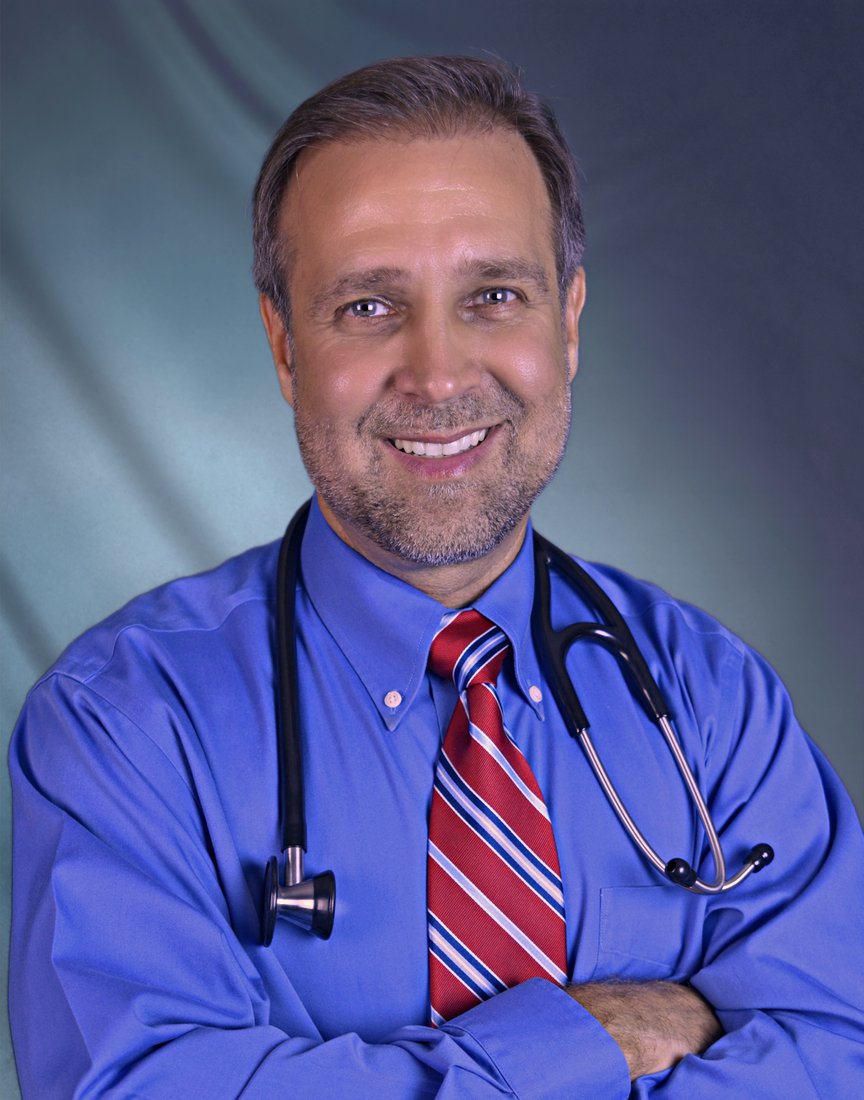
About Dr. Thomas
Four decades of practice, devoted to the science of metabolic medicine and integrative cancer care.
Dr. Thomas is a highly regarded and sought-after physician whose medical expertise has been shaped by extensive education and refined over 40 years of clinical practice. His work centers on the science of metabolic medicine, longevity, and finding and addressing the measurable cancer drivers and the treatment resistance mechanisms that standard oncology leaves unexamined.
His strength lies in his scientific curiosity, creative and analytical thinking, and practical application of cutting-edge research. Despite the demands of a busy medical practice, Dr. Thomas devotes 20-30 hours a week outside the office to reviewing the latest scientific literature and consulting with leading scientists to help identify promising treatments.
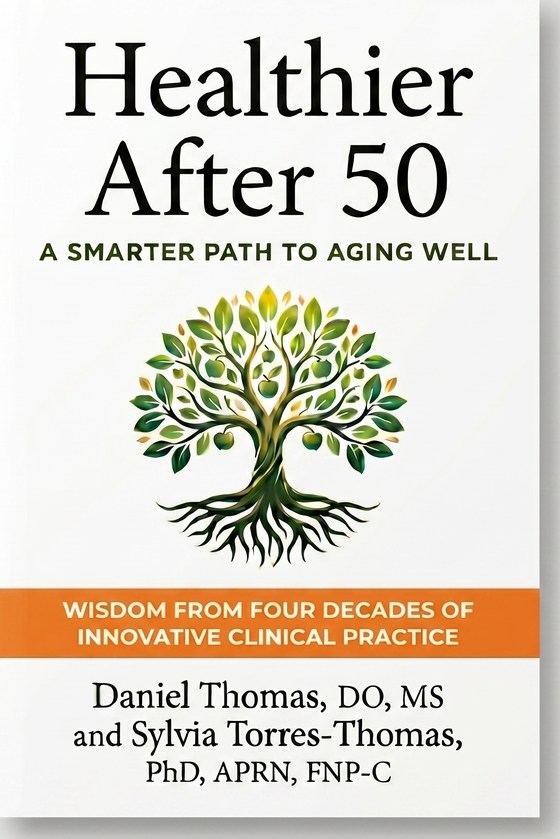
He shares his evidence-based insights at ThomasHealthBlog.com and in his forthcoming book, “Healthier After 50: A Smarter Path to Aging Well,” co-authored with his wife, Dr. Sylvia Torres-Thomas, which will distill their decades of clinical wisdom into a practical guide for living healthier, happier, and longer.
Education & Background
Credentials
A foundation spanning biochemistry and osteopathic medicine, and post-doctoral training in metabolic, nutritional, and cancer-focused integrative medicine.
- Fellowship, Integrative Cancer TherapiesMetabolic Medical Institute, Boca Raton, Florida2016
- Graduate Certificate, Brain Fitness and Memory ManagementUniversity of South Florida Morsani College of Medicine2016
- Graduate Certificate, Metabolic EndocrinologyUniversity of South Florida Morsani College of Medicine2014
- Certificate, Plant-Based NutritionCornell University T. Colin Campbell Center for Nutritional Studies2014
- Master of Science, Metabolic and Nutritional MedicineUniversity of South Florida Morsani College of Medicine2012
- Hospital Rotating InternshipNorthwest General Hospital, Milwaukee, Wisconsin1987
- Doctor of Osteopathic Medicine (D.O.)Des Moines University College of Osteopathic Medicine1986
- Bachelor of Science, BiochemistryAndrews University, Berrien Springs, Michigan1982
To learn more about Dr. Thomas’s background, visit MyDoctorThomas.com.
Watch the free presentation
Integrative cancer care, alongside your conventional treatment.
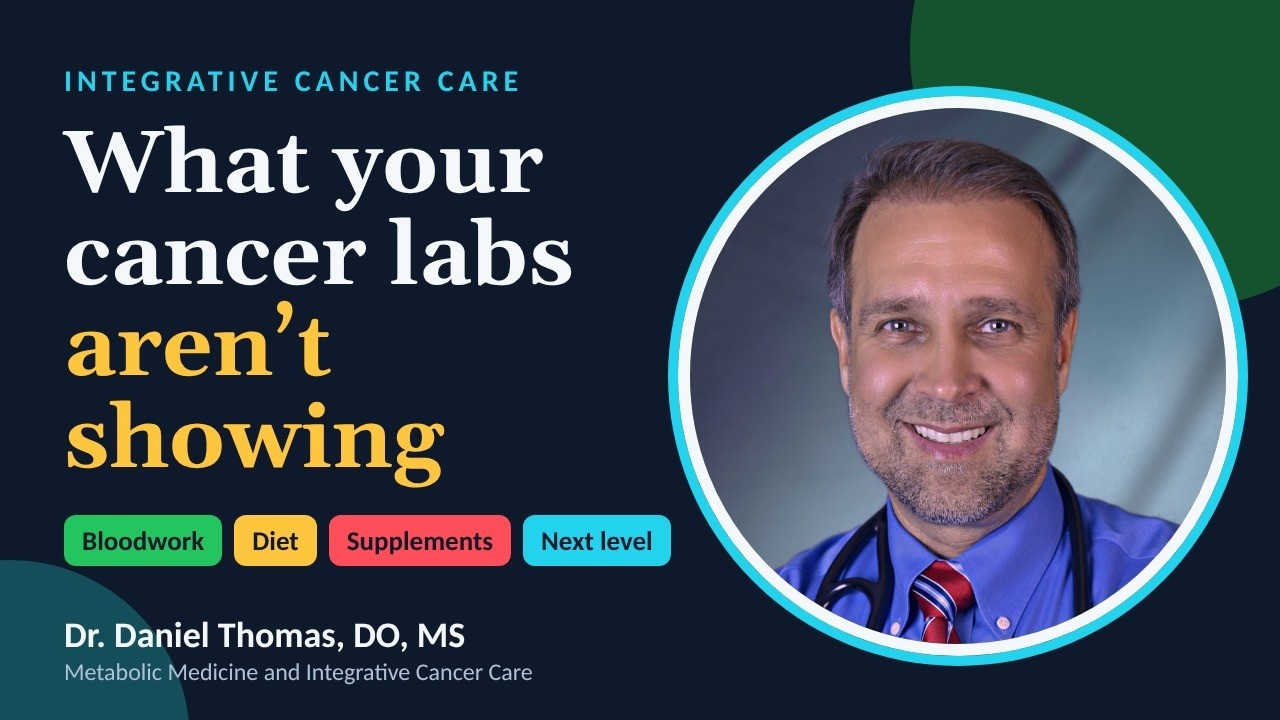
In this 45-minute presentation, Dr. Thomas walks through both halves of this work in plain language. You will learn how the metabolic terrain is measured and improved, which common supplements may work against your treatment, and the ways cancer learns to survive treatment, along with what can be done about each one.
Jump to a topic
Prefer to watch on YouTube? Open the video on YouTube. Like everything on this page, the presentation is educational and is meant to work alongside your oncology care, never in place of it.
Common questions
Questions patients ask first
What will my oncologist think?
Some are enthusiastic, some are skeptical, most are somewhere in between and are primarily concerned, reasonably, about interactions with your treatment. I write my plans to be shared, and I want your oncologist to see them. If they raise a specific objection, I want to hear it.
Do I have to stop conventional treatment?
No. The entire premise is that you don’t. Every recommendation is made with your current regimen in mind and chosen to support it rather than compete with it.
What are repurposed medications, exactly?
They are medications already approved for another condition, prescribed for a different purpose. Off-label prescribing is legal and routine across medicine, and it means the drug’s safety profile is already well characterized even where its use in this context is not yet established. Which agents are appropriate depends on your cancer type, your current treatment, and your labs, so it is a conversation for the consultation rather than something I can outline in advance.
Why hasn’t my oncologist already done this?
This is not an oversight, and the reasons differ for the two halves of this work.
On the terrain, oncology is a demanding specialty focused on attacking the cancer, and an oncologist’s training, time, and reimbursement are all built around that essential work. The bloodwork ordered during treatment is designed mainly to monitor safety rather than to map the metabolic environment surrounding the cancer.
On the escape routes, oncologists practice within treatment guidelines that require large randomized trials before an agent enters standard care. That standard exists for good reason. But most repurposed medications are generic and off-patent, so no company has a commercial reason to fund a trial of that size. The research stays preclinical and observational, and the agents never reach the guidelines, however plausible the mechanism.
Neither is a failure of judgment on your oncologist’s part. In both cases the result is the same. These are not things anyone is assigned to watch.
What kinds of cancer does this apply to?
Solid tumors and hematologic malignancies alike. The underlying metabolic and resistance principles tend to apply broadly across cancer types, though the specifics of any plan are cancer-specific.
How do I start?
With comprehensive bloodwork and an in-depth consultation with Dr. Thomas. Neither half of this work can be planned without both. The panel shows which conditions are present; the consultation is where we work through what they mean for your cancer, your current treatment, and what is worth doing about it. Full details at CancerBloodwork.com.
Your oncologist is fighting the tumor. Someone should be paying attention to the terrain it is growing in, and the escape routes it is using.
Everything here starts in the same place: comprehensive bloodwork and an in-depth consultation with Dr. Thomas to work through what it shows. Both the terrain and the escape routes depend on knowing which conditions are actually present in your case, and which are worth acting on.
Click here to get started